


Where and when
February 23, Monday · 11:30 – 16:00 @ Consiglio Nazionale delle Ricerche, Istituto di Ingegneria del Mare, Landrini Hall, Via di Vallerano 139, 00128 Roma
Info
Professor Maria Vittoria Salvetti and Professor Simone Camarri will give talks respectively on Complex flows simulations: uncertainty quantification and sensitivity analysis and on Adjoint Methods for the Analysis and Control of Flow Instabilities.
Abstract – Complex flows simulations: uncertainty quantification and sensitivity analysis
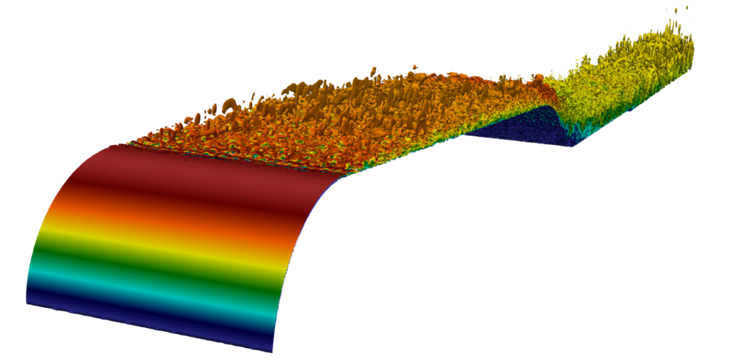
High-fidelity computational models of complex flows provide accurate predictions, but their significant computational cost often makes them impractical for applications requiring repeated evaluations like, e.g., uncertainty quantification, optimization problems or generation of databases for data assimilation methods. To overcome this issue, surrogate modelling has emerged as a strategy to approximately map input parameters to output responses in situations where the evaluation of the ’true’ relationship by means of high- fidelity simulations is too computationally expensive. An example are stochastic methods. However, when the number of uncertain parameters is large, the computational cost of stochastic methods grows exponentially, becoming prohibitive for practical applications. The seminar will begin with a brief overview of complex flow simulations in different fields of application carried out by the Fluid Dynamics group at the University of Pisa. It will then introduce non-intrusive stochastic techniques for uncertainty propagation and sensitivity analysis, with a focus on stochastic collocation methods and sparse grids. Particular attention will be given to a surrogate-informed criterion for constructing sparse-grid interpolants, which significantly reduces the number of expensive model evaluations compared to fully resolved sparse grids. Finally, examples of applications to complex engineering problems will be presented.
Short bio
Maria Vittoria Salvetti is a Full Professor of Fluid Dynamics in the Department of Civil and Industrial Engineering at the University of Pisa. She was Head of the Department since 2020 to 2024. She serves as the Chair of the Scientific Programme Committee of the European Research Community on Flow, Turbulence and Combustion (ERCOFTAC) and is a member of the EUROMECH Council. She served in the IUTAM Congress Committee and in the Scientific Committee of Italian Space Agency. She is the Editor-in-Chief of Flow, Turbulence and Combustion, Associate Editor of Computers and Fluids, editor of the ERCOFTAC Book Series (Springer), and a member of the advisory board of other international journals. She has been, and continues to be, a member of the organizing and scientific committees of numerous international conferences (e.g., DLES, ETMM, FRONTUQ, TI series). Her research activity focuses on the study and modeling of complex flows, spanning a wide range of applications, including flow around bluff bodies, microfluidics, cardiovascular flows, wind turbines, and multiphase and reactive flows. Her research initially concentrated on numerical simulation, with contributions to the development of advanced numerical methods and modeling, as well as to the physical understanding of flows. More recently, Prof. Salvetti has been engaged in the validation of numerical and experimental results, taking part in the organization of benchmark cases and employing stochastic techniques for uncertainty quantification and sensitivity analysis. Finally, her work increasingly relies on the synergistic use of numerical simulation and experimental analysis to understand flow dynamics and optimize them for relevant applications. She is the author of approximately 200 scientific publications indexed in Scopus.
Abstract – Adjoint Methods for the Analysis and Control of Flow Instabilities
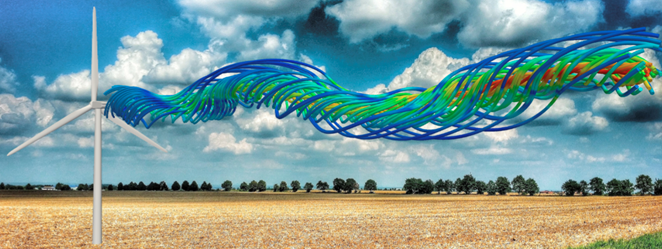
Stability analysis and related adjoint-based techniques are widely used to investigate flow instabilities and to guide strategies for their control. In laminar configurations, these approaches provide a solid and well-established framework for systematic analysis and control. This framework is most naturally formulated for flows dominated by global instabilities behaving as self-sustained oscillators, although the same theoretical and numerical tools can be extended to convectively unstable flows acting as noise amplifiers. Its extension to turbulent flows is more challenging, as the dynamics are dominated by coherent large-scale structures embedded in a turbulent background. A key element enabling this extension is the assumption of marginal stability of the mean flow, which has been shown to hold in a number of canonical configurations. The seminar will start with a concise overview of stability and adjoint-based sensitivity methods. It will then present a series of case studies of increasing complexity, ranging from laminar to turbulent configurations and encompassing both globally and convectively unstable flows.
Short bio
Simone Camarri has been Associate Professor of Fluid Dynamics at the University of Pisa since 2014. His research spans theoretical, numerical, and reduced-order approaches to fluid dynamics, with a primary focus on stability, transition, and control of instabilities. His work includes boundary-layer stability and transition mechanisms; global stability and adjoint-based sensitivity analysis of self-sustained instabilities; bluff-body aerodynamics and wake dynamics; and the development of reduced-order models for flow analysis and control. His research also extends to aerospace propulsion, including plasma modeling of Hall effect thrusters based on fully fluid models and the simulation of rarefied aerodynamics using Test Particle Monte Carlo methods. He is the author of more than 60 scientific publications indexed in Scopus.